
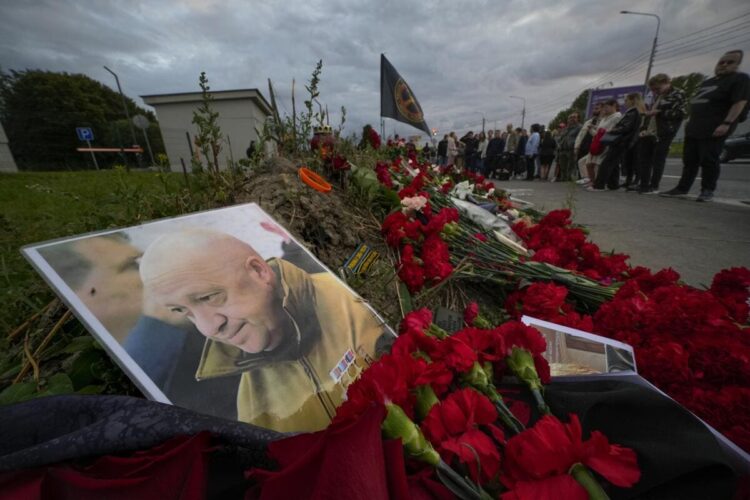
Two months to the day after the orchestrated Wagner Group rebellion that led to the symbolic capture of Rostov-on-Don and the subsequent march towards Moscow, Evgeny Prigozhin and Dimitry Utkin met their fate, likely by the hand of the Russian security apparatus and Putin’s devising. The who, what, where, why, and how will likely remain a point of contention for years to come. And, we may never know the facts that led up to the crash of Prigozhin’s Embraer private plane 33 minutes into the flight. Speculation concerning the cause of the crash remains rife, and this thought piece will not to add to that. However, a significant question remains – what will happen to the Wagner Group now?
Wagnerites in denial
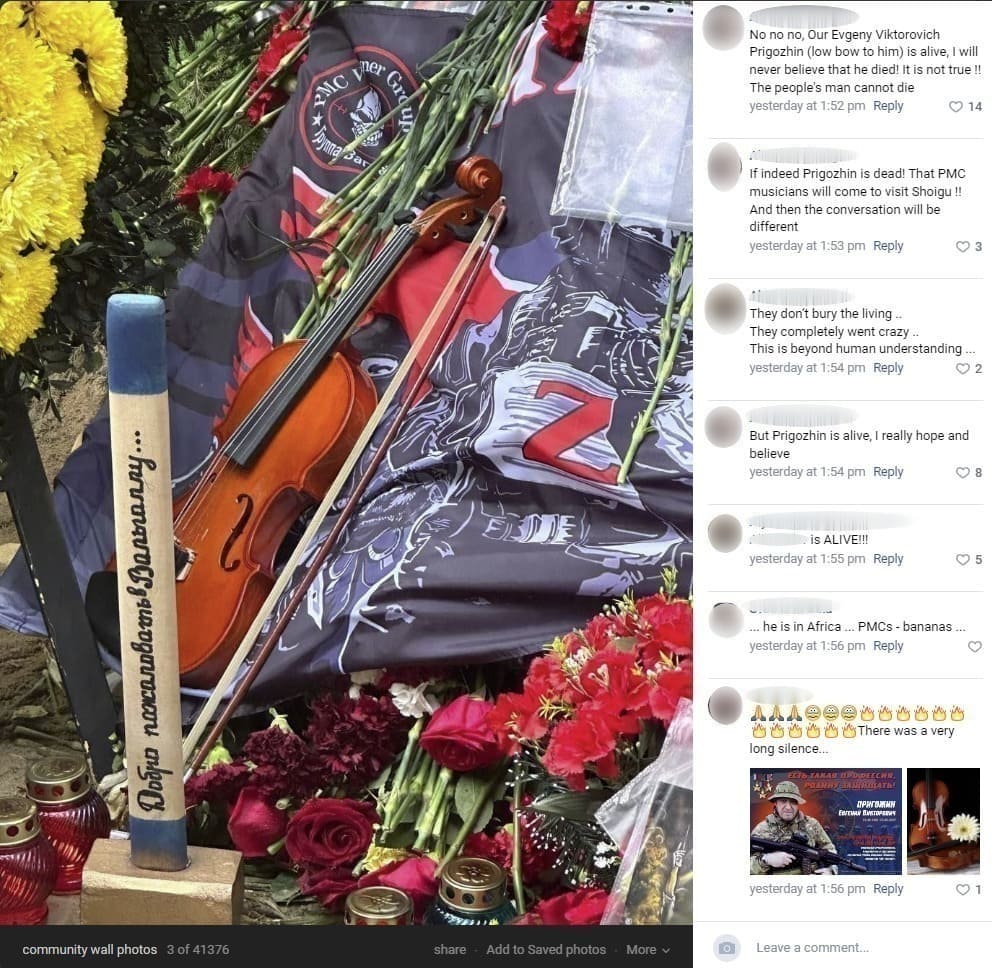
Quite simply, the majority of followers and subscribers to the Wagner Group communities on social media refuse to comprehend and accept that Prigozhin and Utkin are both dead. Conspiracies are rife, the most popular being that Prigozhin is alive and well somewhere in Africa! This opinion expressed by Wagner Group followers has seen a notable uptick in recent days following the emergence of a video showing Prigozhin claiming to be in Africa and appearing unconcerned about his safety. In the video, he states: “For everyone discussing whether I’m alive or not and how I’m doing. It’s currently a weekend in the second half of August 2023. I’m in Africa, so for those who like to speculate about my elimination, my private life, my work there, or anything else: everything’s fine, as a matter of fact“.
The location from where the video was filmed remains unknown. That said, the video’s EXIF metadata when analysed using Paliscope YOSE tells us that the video file titled ‘IMG_4810.MOV’ was created on the 30th of August 2023 at 21:36:33. The EXIF metadata further shows that the file was modified on the same date but five seconds after the file was created.
What is of interest is the fact that on the video, Prigozhin indicates the approximate date to be a weekend in the second half of August – either the weekend starting the 19th or 26th of August. Knowing what we know regarding the plane crash that occurred on the 23rd of August 2023, it is assessed that the video was filmed on the weekend starting the 19th of August 2023.
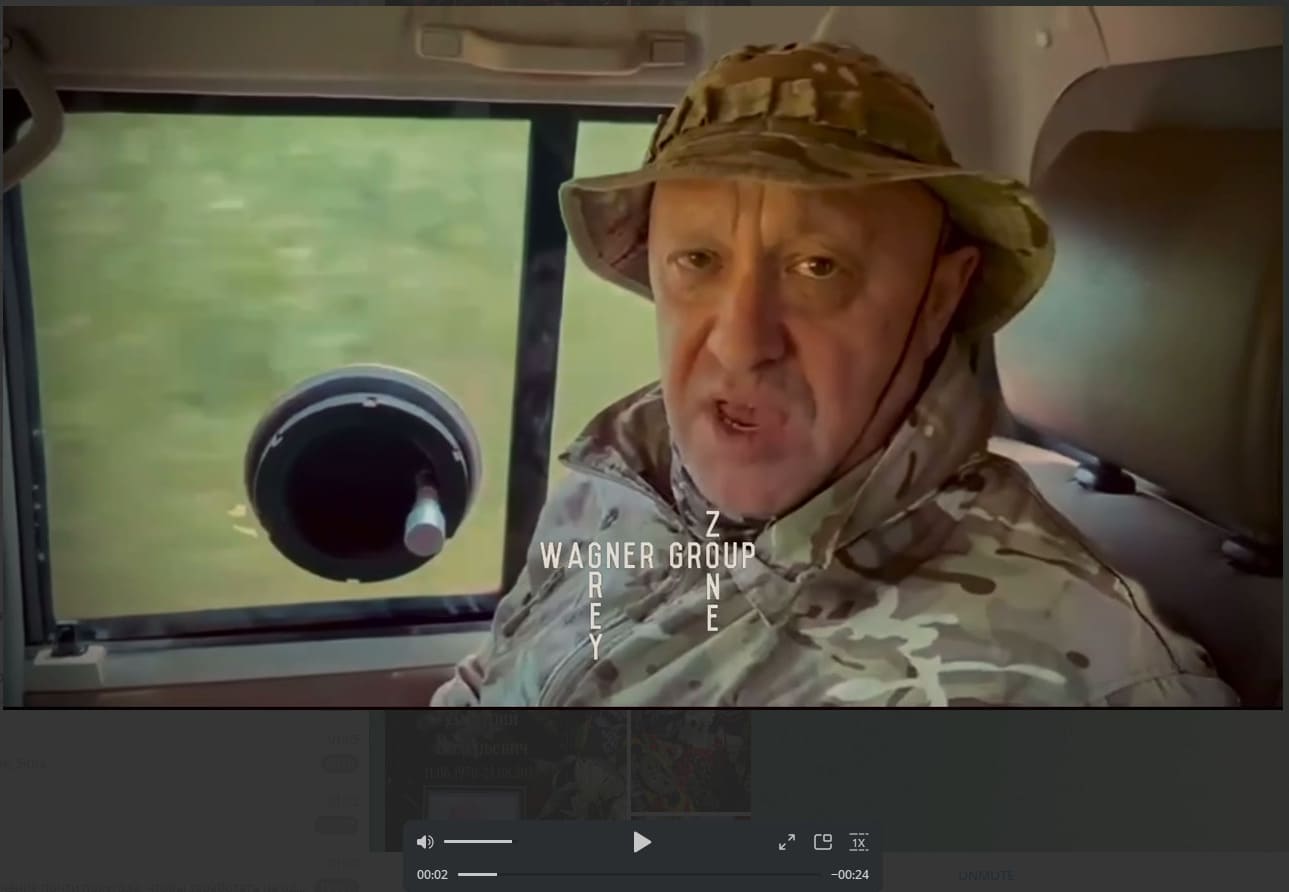
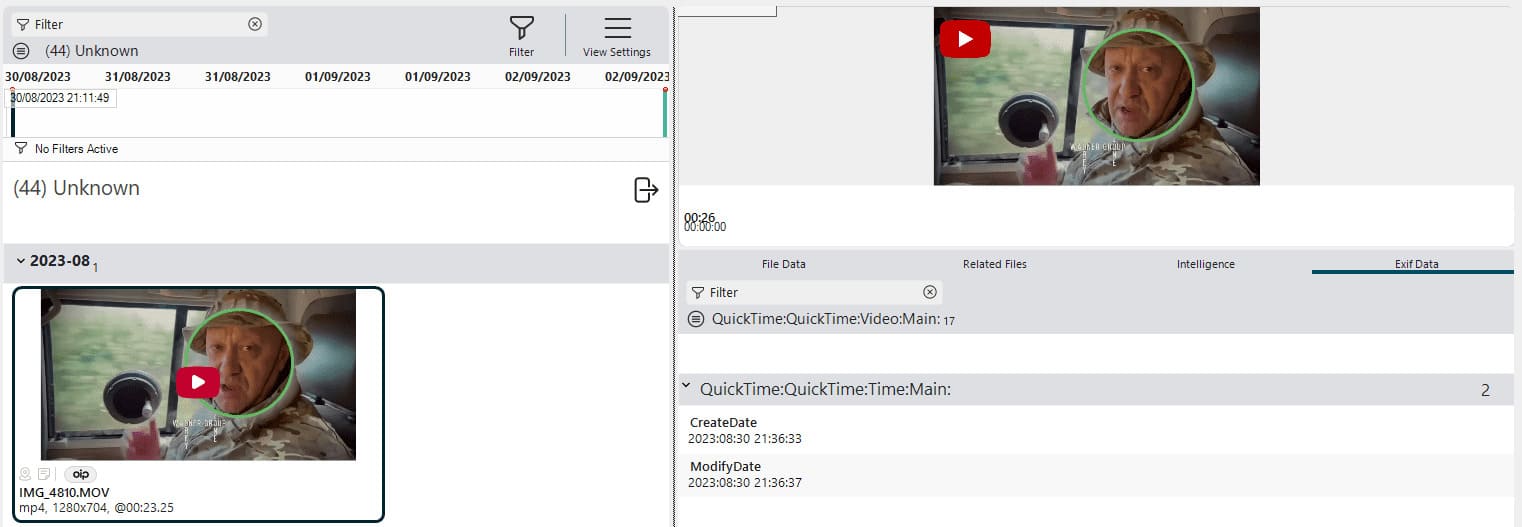
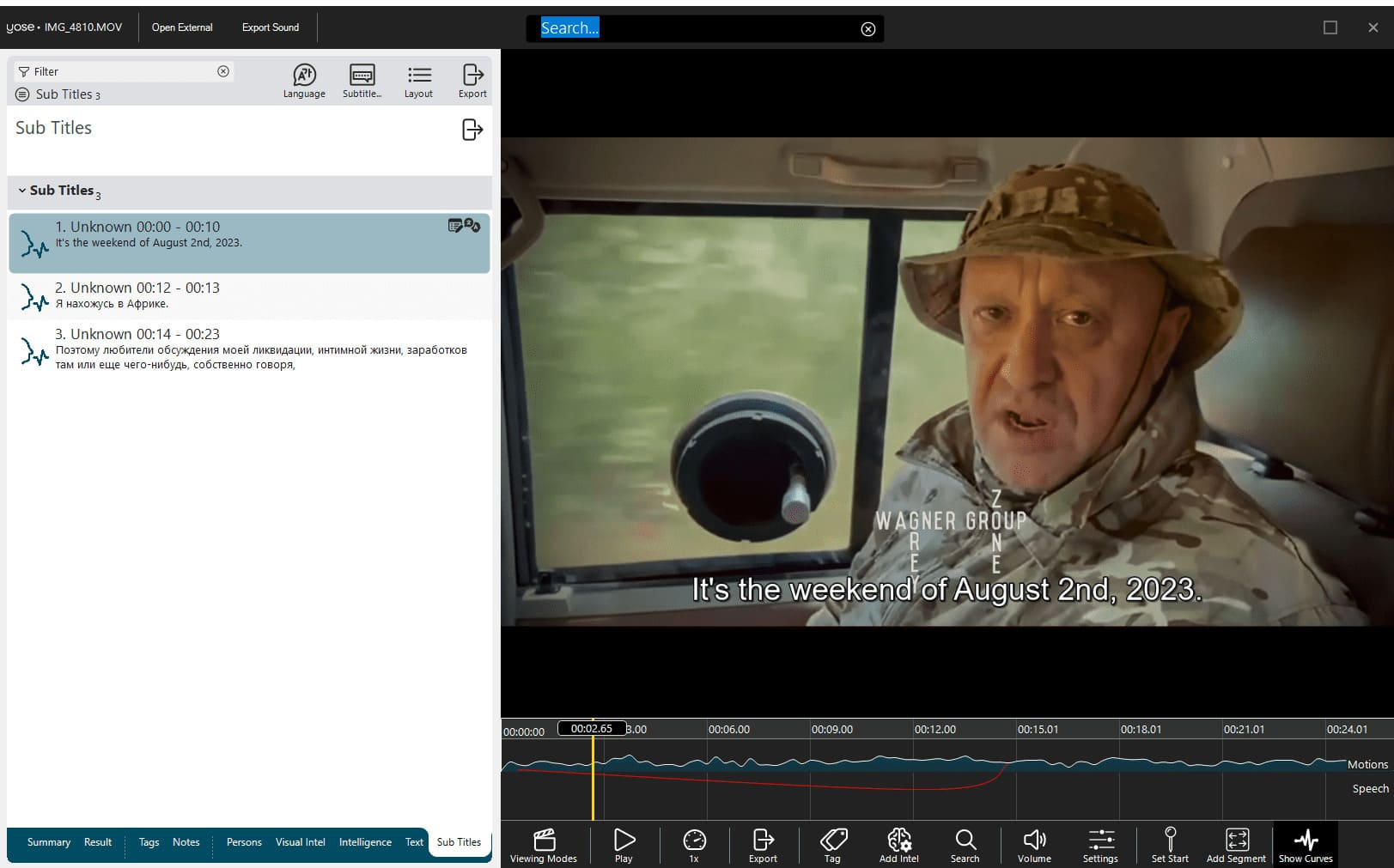
But, the creation date and time indicate that the video was filmed seven days after the plane crash. How can this be explained? Considering that the EXIF metadata also indicates that the video file was modified five seconds after the creation date and time. The likely cause of this is the video creator either converting the video from a ‘.mov’ filetype into a ‘.mp4’ and/or applying the watermark that is associated with the pro-Wagner Group Telegram channel ‘The Grey Zone’. Typically, the process of converting a video file type can be done using a variety of online and standalone solutions. Most of which will also compress the video file immediately following compression.
We know from the video file that it was named ‘IMG_4810.MOV’, but the file extension itself is ‘.mp4’. This would indicate that the file was converted from ‘.mov’ to ‘.mp4’, and then probably compressed.
The next question is whether the EXIF data mismatch was intentional on the part of the video creator – it is possible, though it could easily be an oversight. That said, it is clear from analysing online communities on VK and Telegram that many users and administrators intend to maintain the notion that both Prigozhin and Utkin are alive and well. There are many hypothetical reasons as to why this may be the case, though it is realistically plausible that community administrators are seeking to instil a sense of business as usual. The reality, of course, is far removed.
A snapshot into Utkin’s life begins to emerge
Since his funeral on the 1st of September 2023 at the Federal Military Memorial Cemetery in Mytishchi, a steady trickle of information that provides a snapshot into the life of Dimitry Utkin has begun to emerge. What we know already is that Utkin was commonly referred to as ‘The Ninth’ or simply ‘Wagner’. However, images posted to social media have given us a further indication into the role he played in Syria as well as the Russian medals awarded to him.
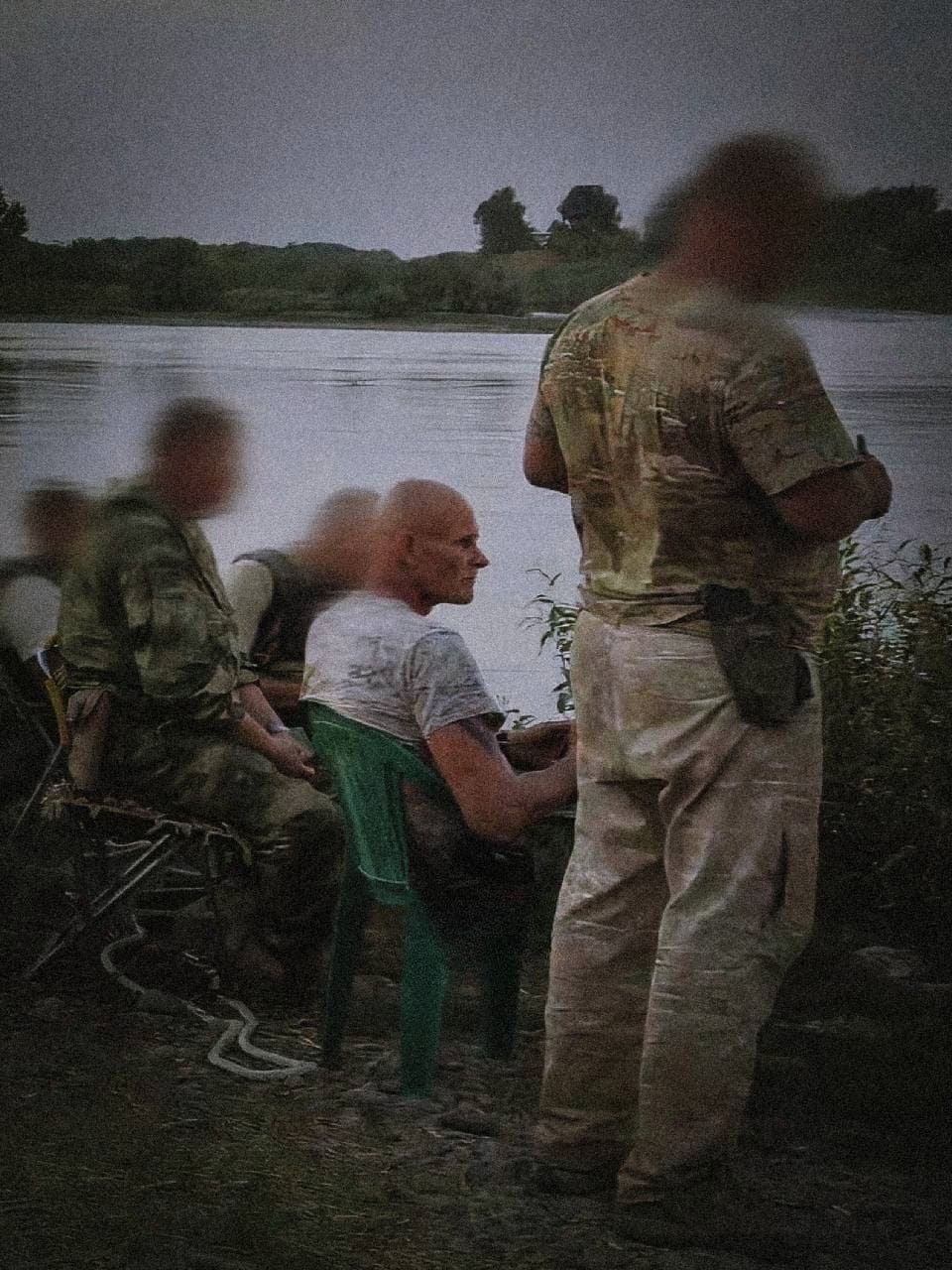

One image of Utkin taken in 2017 shows him sitting on the banks of the Euphrates River during a Wagner Group operation to remove so-called Islamic State militants from Deir el-Zour. The image prompted followers on online Wagner Group communities to speculate that the infamous picture of Utkin displaying tattoos bearing Nazi symbols was that of a different person altogether. One user suggested that he had served alongside Utkin, adding that the latter would read books about Norse mythology. Defending Utkin, many users denied that he was a Nazi, but a Russian nationalist.
The Wagner Group ‘Rōnin’
Looking closely at the current state of the Wagner Group, specifically its band of fighters in Belarus, similarities can be drawn to the ‘Rōnin’ of feudal Japan. A ‘Rōnin’ was a a type of samurai who had no lord or master and in some cases, had also severed all links with his family or clan. In feudal Japan, a samurai became a Rōnin upon the death of his master, or after the loss of his master’s favour or legal privilege.
How this compares to the band of Wagner Group fighters that remain in Belarus is because these fighters were reportedly involved in the Wagner Group rebellion on the 23rd of July 2023. As a consequence of their actions, they were banished by Putin, who added that they would not be allowed to take up the offer of signing contracts with the Russian Ministry of Defence in the future.
Telegram channels associated with the Wagner Group in Belarus suggests that their training activities in support of the Belarusian Armed Forces continue despite the deaths of Prigozhin and Utkin. Although Belarusian President Alexander Lukashenko has since spoken on the public record to indicate that the Wagner Group fighters in Belarus will remain, there is an expectation that the group will eventually cease to exist for several reasons.
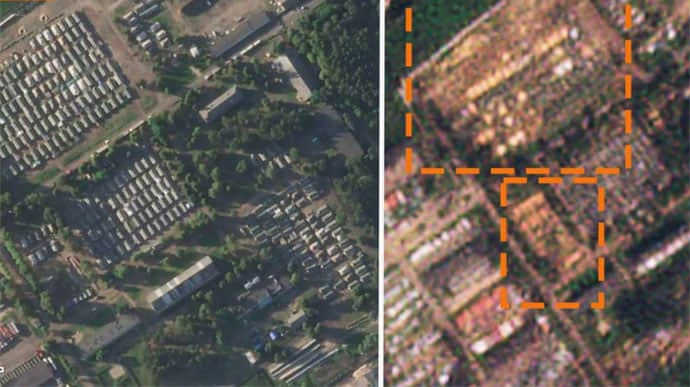
Firstly, on the 31st of July 2023, uncorroborated single-source reporting indicated that large numbers of Wagner Group fighters based at Tsel Garrison had been returned to Russia ‘on vacation’ due to Lukanshenko’s refusal to finance the Wagner Group’s stay in Belarus. The report added that Lukashenko had expected the Russian government to finance the Wagner Group’s presence in Belarus according to an agreement that he reached with Putin on the 23rd of June 2023. However, it appeared that the Russian government had reneged on the deal, likely as a means to apply further pressure on Prigozhin and Utkin. Whilst the dynamics of the deal between Putin and Lukashenko are interesting in itself, it does reinforce the view that the Wagner Group is reliant on state hand-outs. Although it may be the case that the Belarusian government will pay the Wagner Group in Belarus for training services to its armed forces, this is highly unlikely to be a viable long-term business model for the group. After all, one must ask how much training can be provided and for how long? On a related point, satellite imagery dated the 23rd of August 2023 showed that tents at the Wagner Group base at Tsel Garrison had been dismantled.
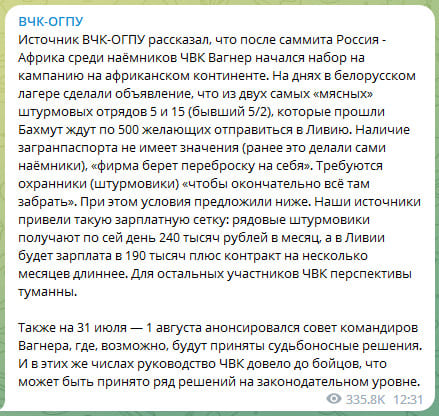
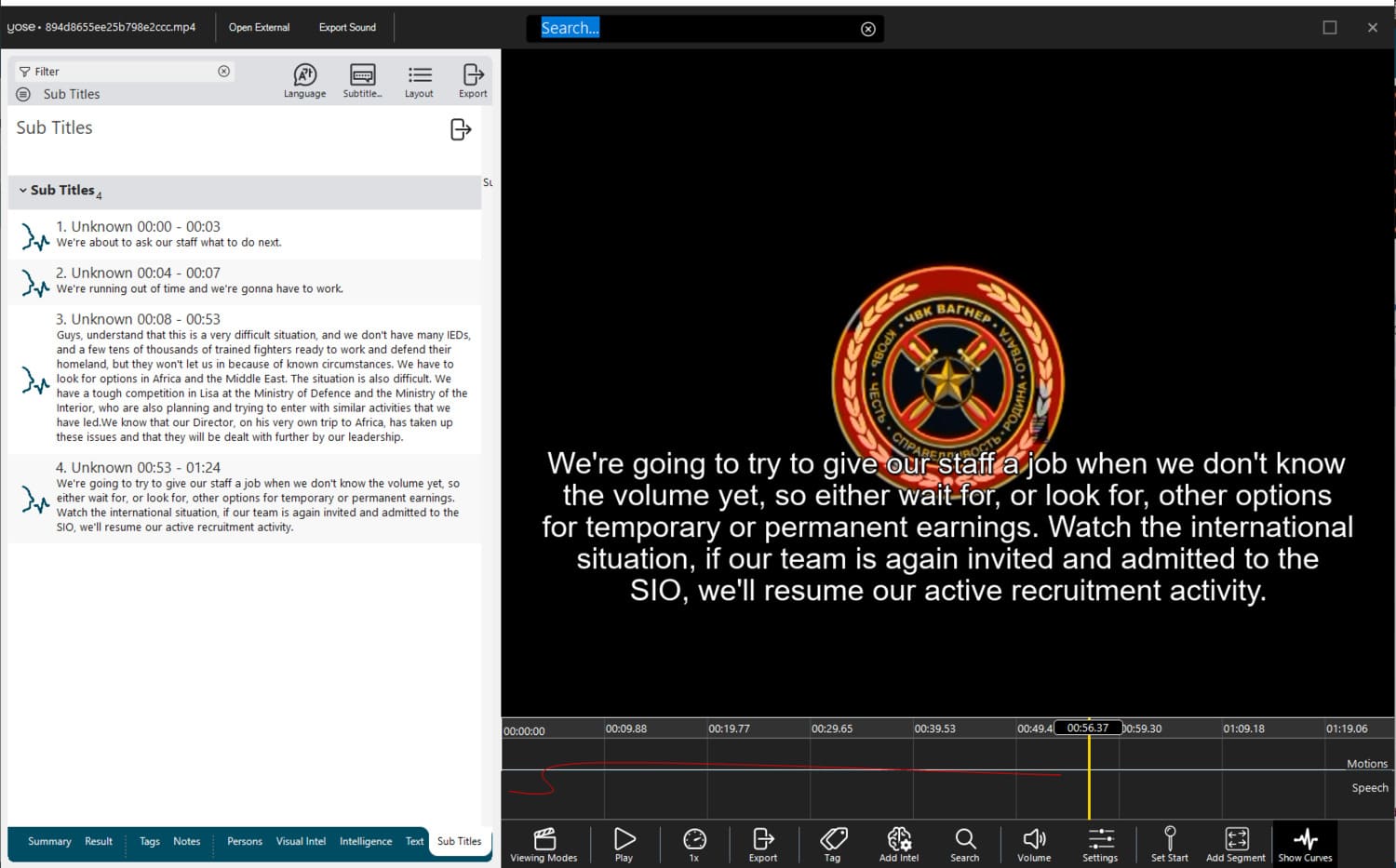
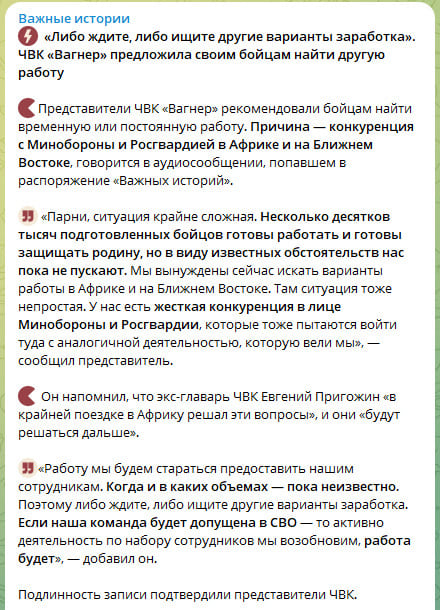
Secondly, there has been a long-held expectation that the Russian Ministry of Defence would seize controlling interests over the Wagner Group’s overseas security contracts in several countries. Indeed, open-source reporting has pointed out that this has already begun. This further prompted Wagner Group Telegram channels to release a statement encouraging its members to “find other work”, adding that finding employment opportunities for the Wagner Group was what Prigozhin was seeking to do during his most recent trip to Africa.
Whilst the remnants of the Wagner Group remain active in Belarus, they will likely eventually cease to exist as a result of continued pressure from the Russian government. For the individual fighters, their options are severely constrained. Their participation in the 23rd of June 2023 rebellion excludes them from signing contracts with other PMCs aligned with the Russian Ministry of Defence. Equally, they likely face the prospect of being arrested and imprisoned by the Russian security apparatus.
Consolidating the Russian PMCs
As earlier predicted, a consolidation of Russian PMCs is currently underway. It also appears that former Wagner Group commander Andrei Nikolaevich Troshev [callsign ‘Sedoi’] is involved in the consolidation. In my previous analysis, the 29th June 2023 meeting between Wagner Group commanders (including Prigozhin and Utkin) resulted in Putin reportedly offering Wagner Group commanders employment options, on the condition that Troshev assume the role of commander. However, Prigozhin and Utkin reportedly turned down the offer, resulting in Troshev being stripped of his command position within the Wagner Group. For Prigozhin and Utkin, their refusal to cede control of the Wagner Group was likely to have been the determining factor that led to their deaths.
The outcome of the reported meeting on the 29th of June 2023 raised the probability of a split emerging with Prigozhin and Utkin on one side, and Troshev on the other. Additionally, the meeting indicated an interesting dynamic between Putin and Troshev which signalled a likely intent by both individuals to consolidate veteran Wagner Group commanders under the Russian Ministry of Defence.
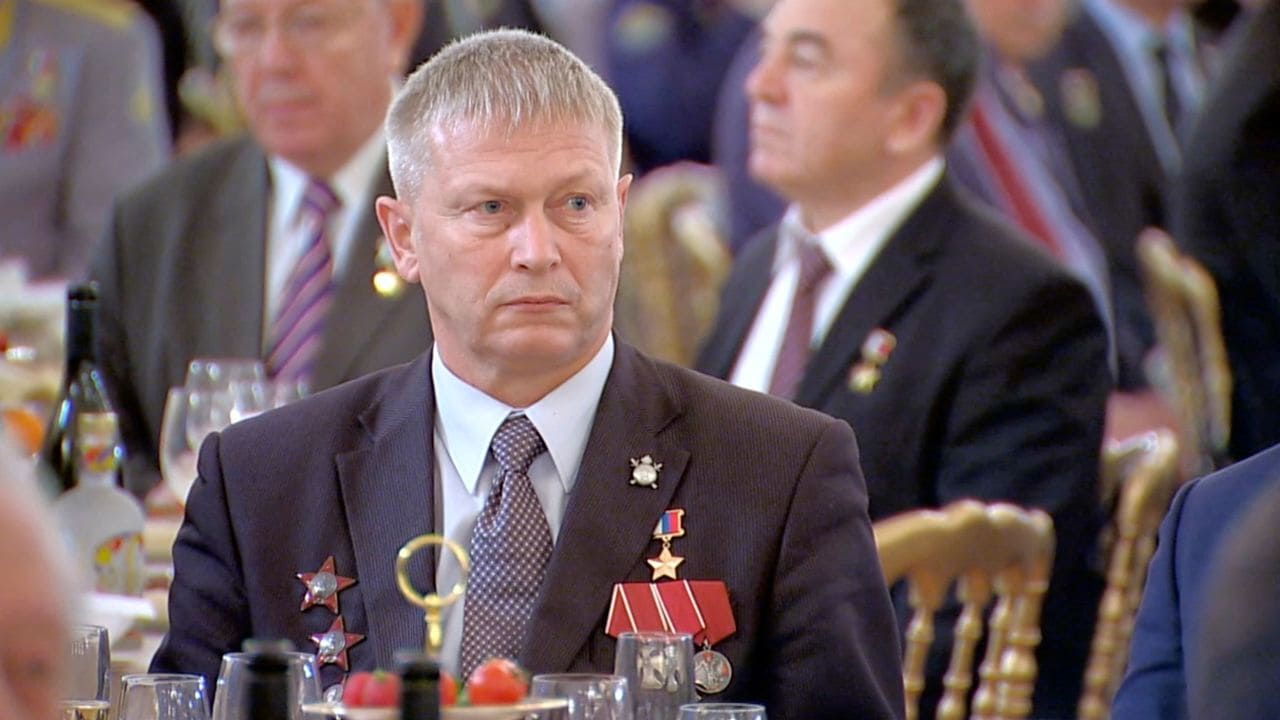
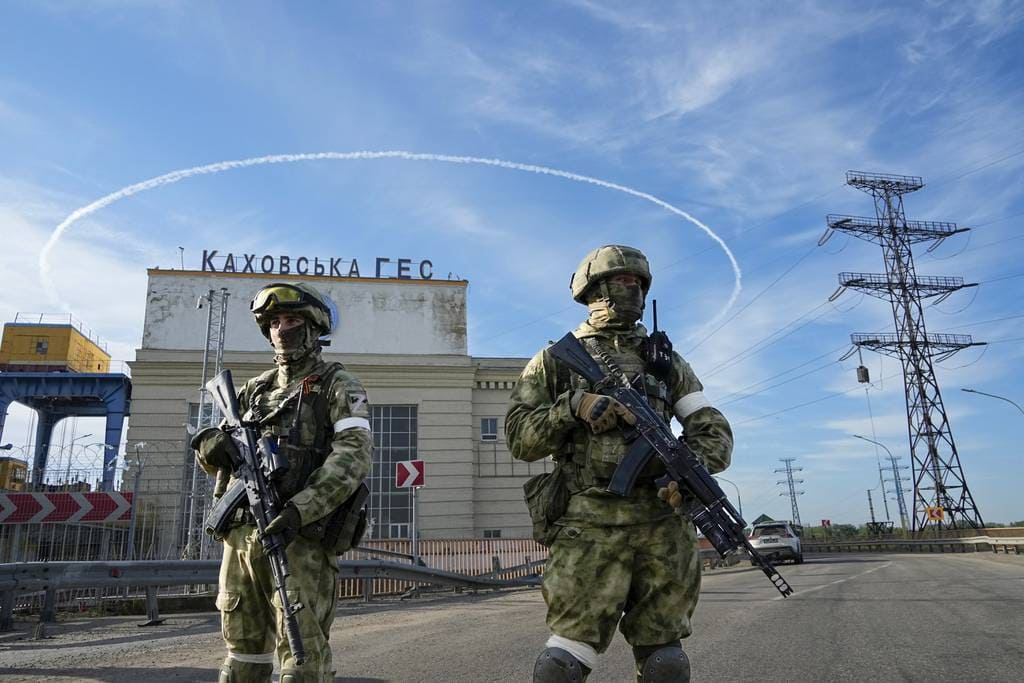
Since then, social media reporting has indicated that Troshev has assumed some form of command position within Redut PMC – which has reported links to businessman Gennady Timchenko and Gazprom. Additional reports has further indicated that the Russian Ministry of Defence have appointed Deputy Defence Minister Yunus-bek Yevkurov as the individual responsible for overseeing the realignment of the Russian PMCs under a “volunteer corps” subordinate to the Moscow military district. Considering Troshev’s role within PMC Redut and that he was earmarked by Putin to lead the Wagner Group, it is plausible that he may be tasked with the role of integrating the PMCs under one unified leadership. A finer point in this regard is that under the control of Troshev, PMC Redut has already assumed control of Wagner Group contracts in Libya and Syria. Additionally, the former Wagner Group training facility at Molkino has reportedly been handed over to PMC Redut by the Russian Ministry of Defence.
That said, PMC Redut is not the only player in the post-Wagner Group landscape. Separate reports indicate that Konvoy PMC – established by the Moscow-appointed head of Crimea Sergei Aksyonov and led by former Wagner Group commander Konstantin “Mazay” Pikalov has been awarded security contracts for Russian interests elsewhere in Africa.
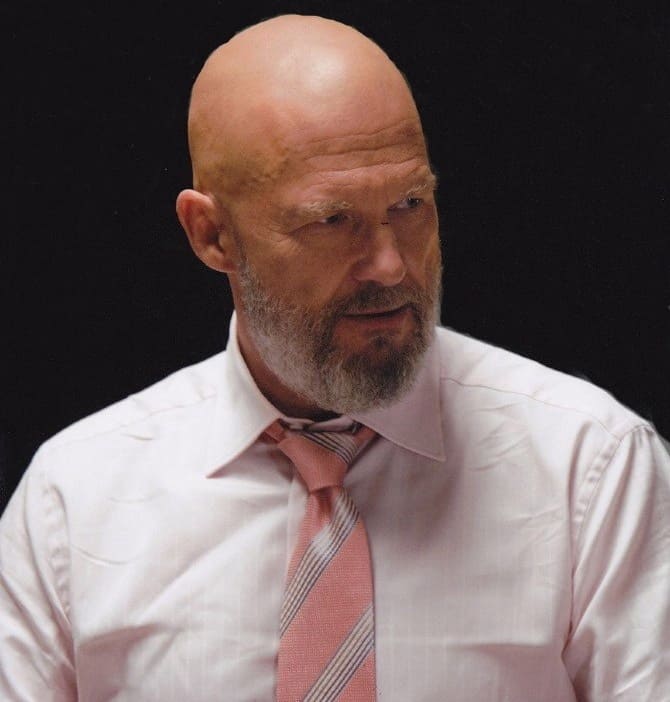
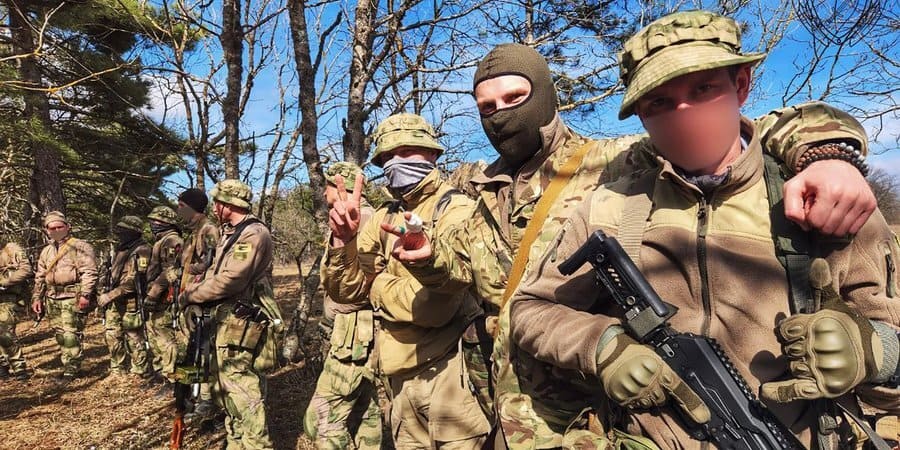
A consolidation of Konvoy and Redut PMC is inevitable, though it is highly likely that Putin will only approve of the formation of a unified PMC once he is certain that the loyalties of PMC commanders will not be brought into question once more. The fast-paced developments within the Russian PMC landscape so soon after the deaths of Prigozhin and Utkin raises the likelihood that their deaths were orchestrated with a view to ‘cutting the head/s off the snake’ and applying pressure on remaining Wagner Group commanders that have been ‘sitting on the fence’ since the rebellion.
Trials and tribulations of remaining Prigozhin loyalists
The reaction to the fast-moving developments concerning PMC Konvoy and Redut has undoubtedly shaken many remaining Wagner Group commanders, especially so soon after the deaths of Prigozhin and Utkin. Online, the Wagner Group is eager to portray a sense of business and usual. However, statements released on Wagner Group online communities have rebuffed reports of a mass exodus of fighters to PMC Redut.
One statement released by the Wagner Group indicated that remaining members of the ‘Council of Commanders’ had yet to allocate a successor to Prigozhin and Utkin, despite unconfirmed reports suggesting that Anton Olegovich Elizarov [callsign ‘Lotus’] had been appointed as head of the Wagner Group. Elizarov would be the choice of ordinary Wagner Group fighters to lead them since he reportedly took no active role in the rebellion. However, his documented disputes with the Russian government and Troshev himself underscore the prospect that the Wagner Group will likely avoid bowing to government pressure by refusing to sign contracts with the Russian Ministry of Defence.
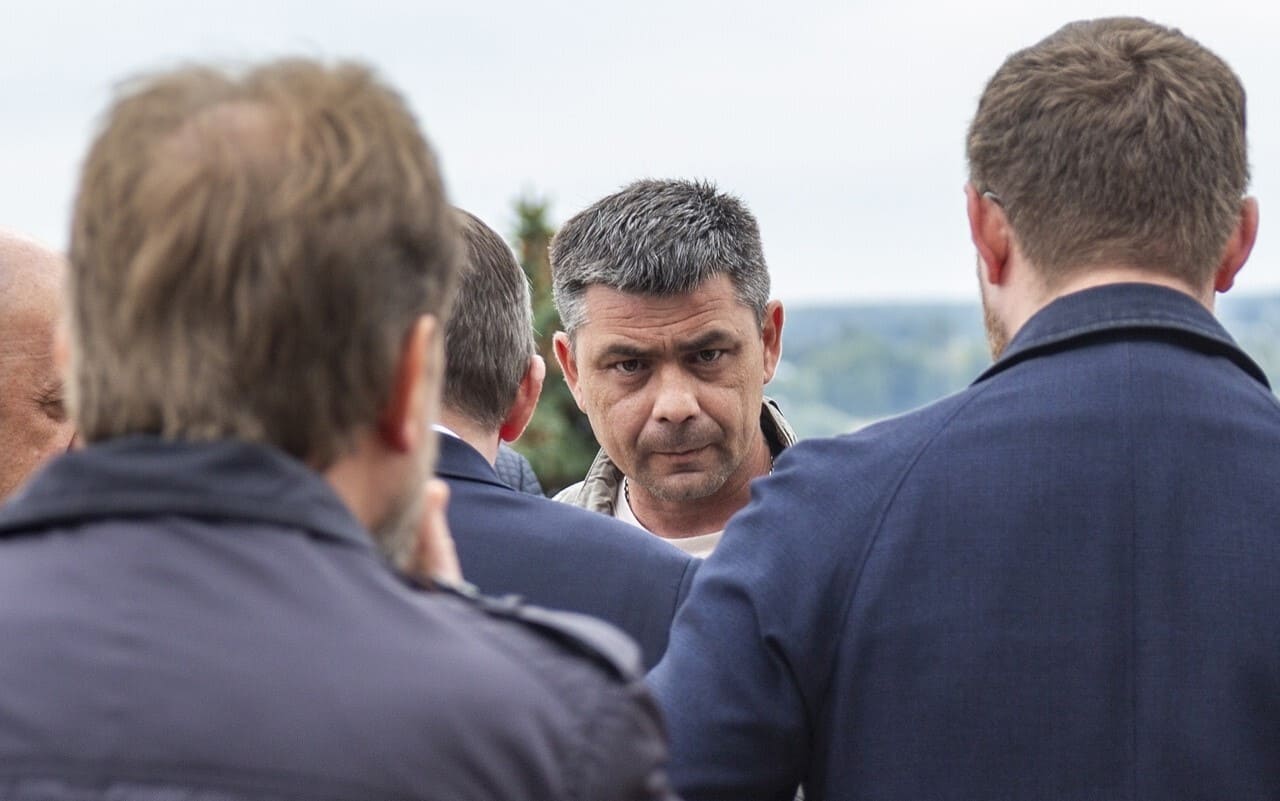
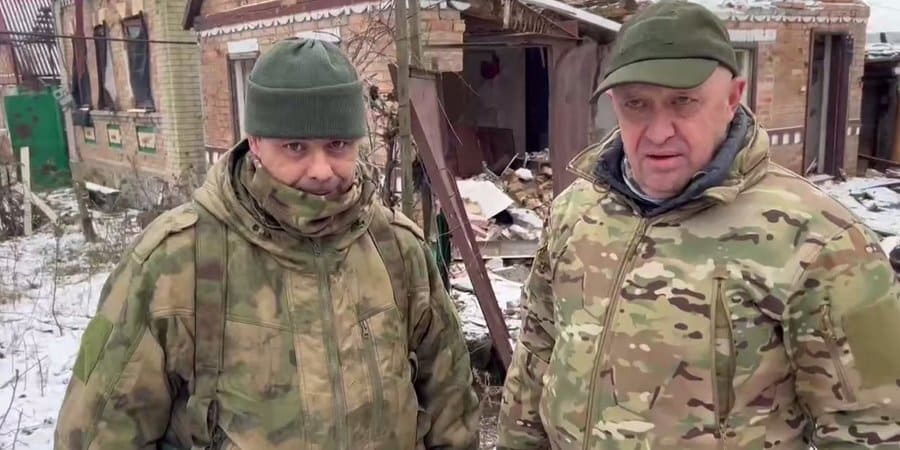
That said, it is realistically plausible that some senior Wagner Group commanders will realise that the Wagner Group ‘brand’ is considered to be the poisoned chalice that is being squeezed to the point where it will eventually be fizzled out. For their part, they face the choice of joining Troshev or overseeing the eventual dismantling of the Wagner Group – undoubtedly, many will choose the former rather than the latter.
The future role of Russian PMCs in Ukraine
One vital lesson that Putin and Russian defence ministers have likely learnt is that the war in Ukraine acted as a pressure cooker that brought the Wagner Group into confrontation with the Russian armed forces – at all levels. Although Russia in some way credited tactical success in Bakhmut and Soledar to the Wagner Group, it did not deflect away growing fissures that lay between the Wagner Group leadership and senior defence ministers. Concurrently, Prigozhin’s increasing popularity amongst the domestic Russian audience further gave way to the Wagner Group gaining a sense of entitlement that ultimately led to its downfall.
Recognising the lessons learnt from deploying PMCs alongside the military within conventional operating theatres, the Russian leadership is unlikely to enact the same strategy once again. An additional consideration is the fact that the Wagner Group was deployed to the occupied territories of Ukraine as an enabling mechanism for Russia to train and equip pro-Russian militias whilst maintaining plausible deniability. Since February 2022, there is quite simply no need for Russia to deny its involvement in the occupied territories of Ukraine and can instead rely on its armed forces.
For the foreseeable future, Russian PMCs are likely to be employed in protecting Russia’s overseas interests – especially in Syria, Libya, Mali, and the Central African Republic. That said, should the Armed Forces of Ukraine continue to achieve tactical military successes that encroach even further on vital ground in the Donbas and Crimea, PMCs could likely be further utilised as a counter-attacking force.
One thing is almost certain, the Wagner Group is expected to fizzle out in the coming weeks or months. Whilst the Wagner Group has previously gone through a rebranding – notably from the ‘Slavonic Corps PMC’ to the ‘Wagner PMC’ – this time, however, it is in the interests of many in the higher echelons of the Kremlin that the Wagner Group be confined the grave along with its founders.


