
What am I trying to achieve?
Every investigation or collection task requires a thought-through process in the form of an Intelligence Collection Plan. Ultimately, the main goal is to identify as many fighters as possible and unwrap their digital and physical presence on the battlefield.
In recent years, various leaks and exposés has revealed the identities of up to 4000 Wagner Group fighters. This set the baseline for the project that is currently ongoing. Essentially, the main goal is to identify as many Wagner Group fighters and aligned-entities.
This process is fairly straightforward despite it being a multi-tracked approach.
Collecting the data
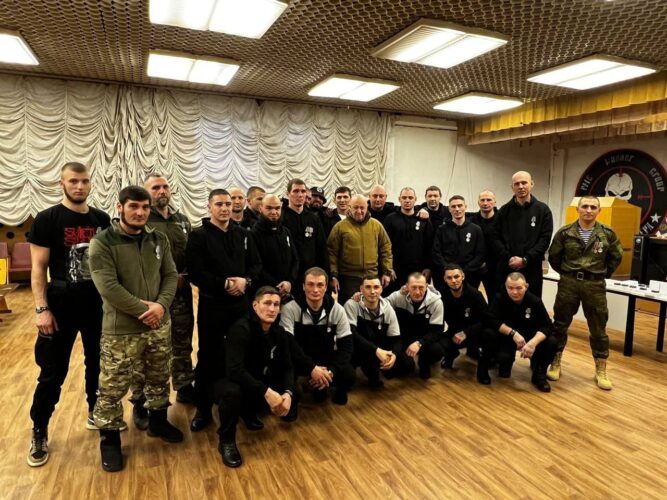
The first approach is via social media. The reason why is because we all have a presence on social media in one way, shape, or form; and the same applies to members of the Wagner Group. By analysing the social connections between identified Wagner Group fighters, it is possible to identify people who have three or more shared connections. This now presents an opportunity to investigate even further by looking at visual content on the social media profiles of those individuals and looking for clues such as distinctive Wagner Group medals, combat patches, signature equipment, and geo-tagged images (to name but a few).
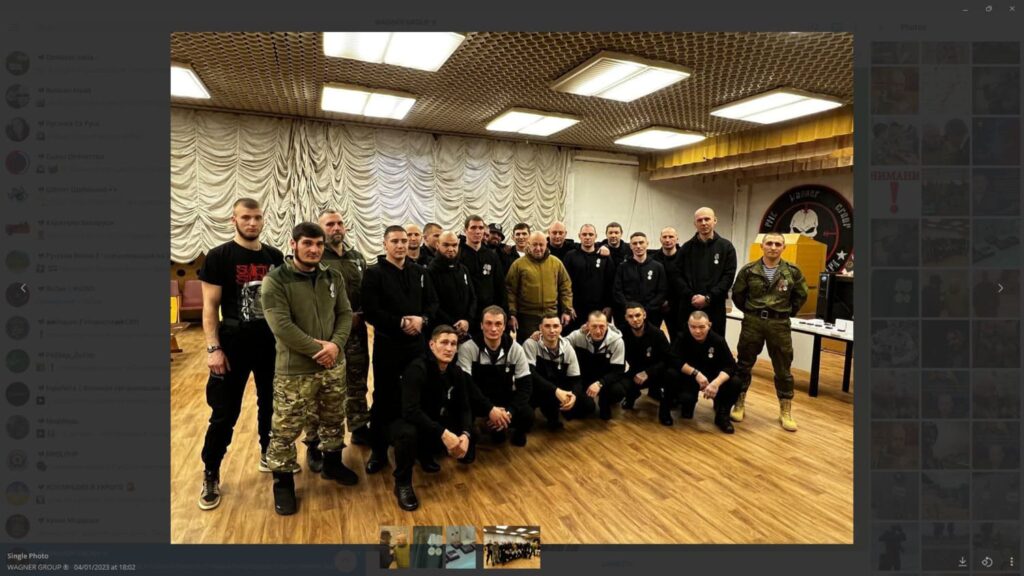
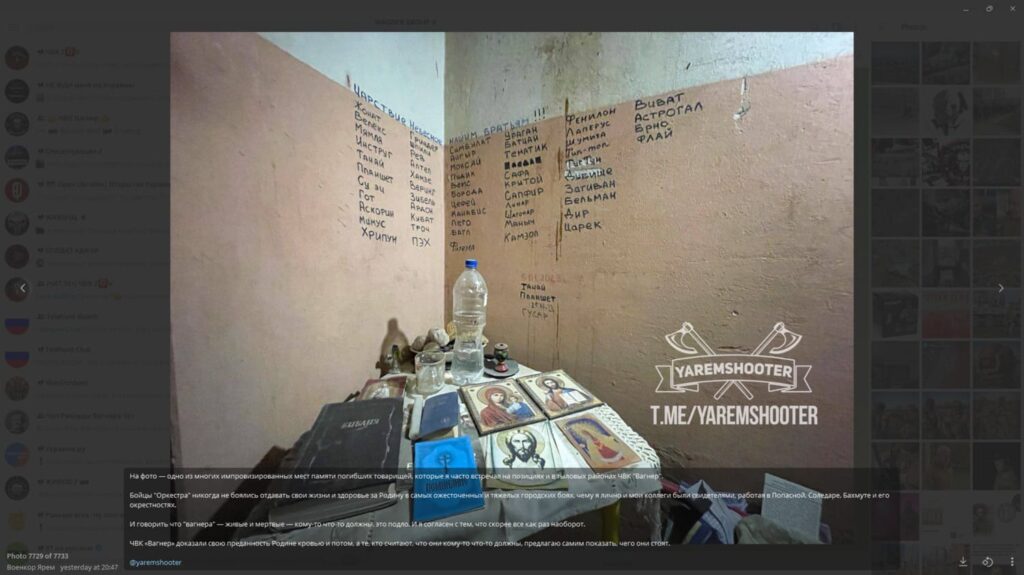
The second approach is by monitoring hundreds of Telegram channels and filtering through thousands of posts each day in order to identify names, callsign names, and visual content concerning Wagner Group fighters. The key principle is that what starts with a callsign name can be transformed into a complete profile over a period of time.
But, the key fact is that this is a time-consuming process that often extends to the early hours of each morning!
How this is all achieved is through various Python-based scripts that will automate the collection of data from social media and create JSON files that subsequently converted into CSV. However, for some data elements, some manual work is needed in order to use point-and-click solutions.
Collating and analysing the data
There are situations when traditional collation and analysis process are genuinely more practicable – but not in this case! With the sheer amount of structured data and media, powerful tools connect the dots and enable me to study mutual social connections that exist between Wagner Group fighters and identify more names and faces.
Collating the data is a very streamlined process to undertake – especially when applying a process of tagging. By creating and implementing a tagging system, I was then able to tag Wagner Group fighters according to which sub-group they belong to in addition to other categories including nationality, current status, operational deployments, and role/s.
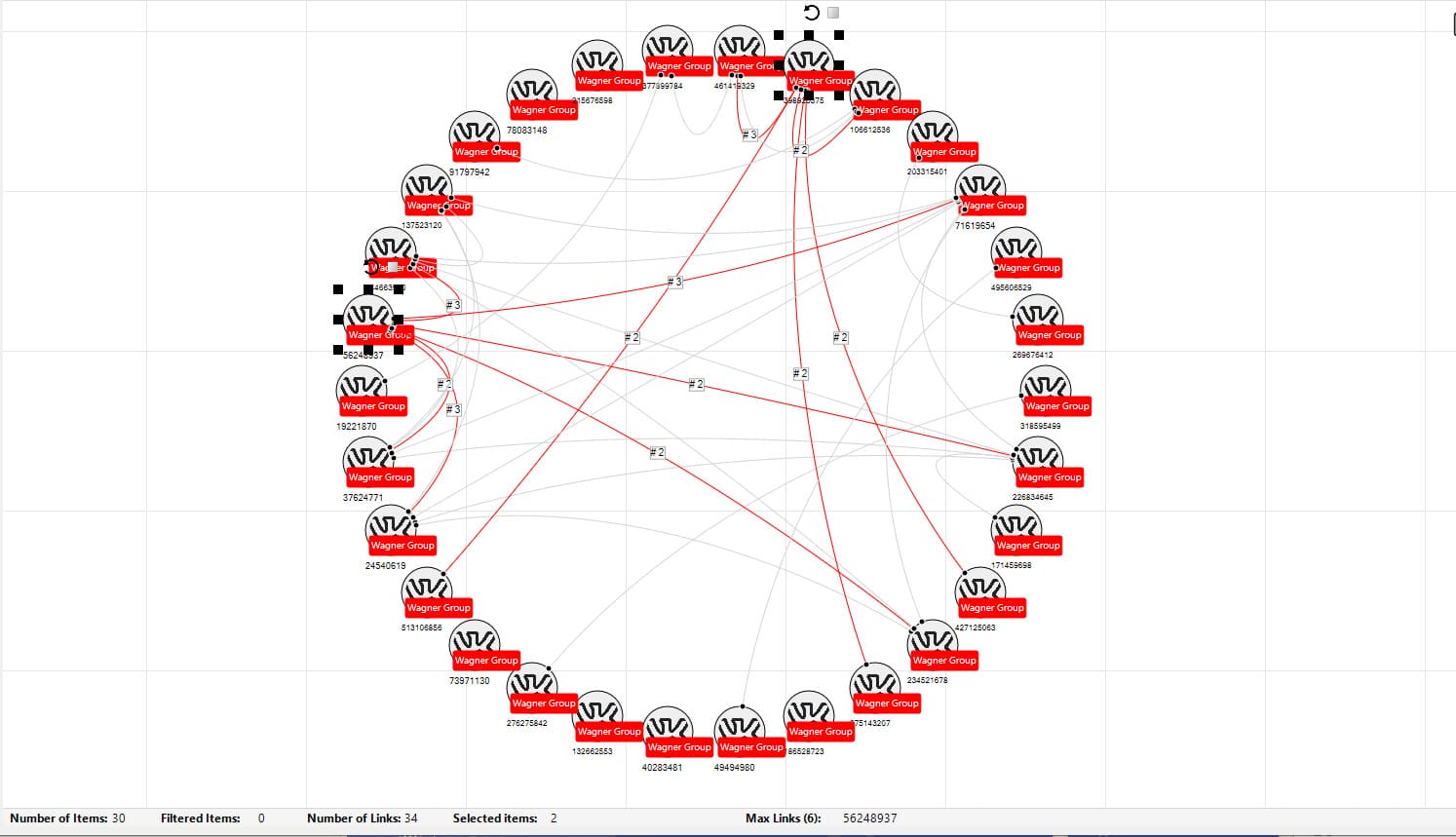
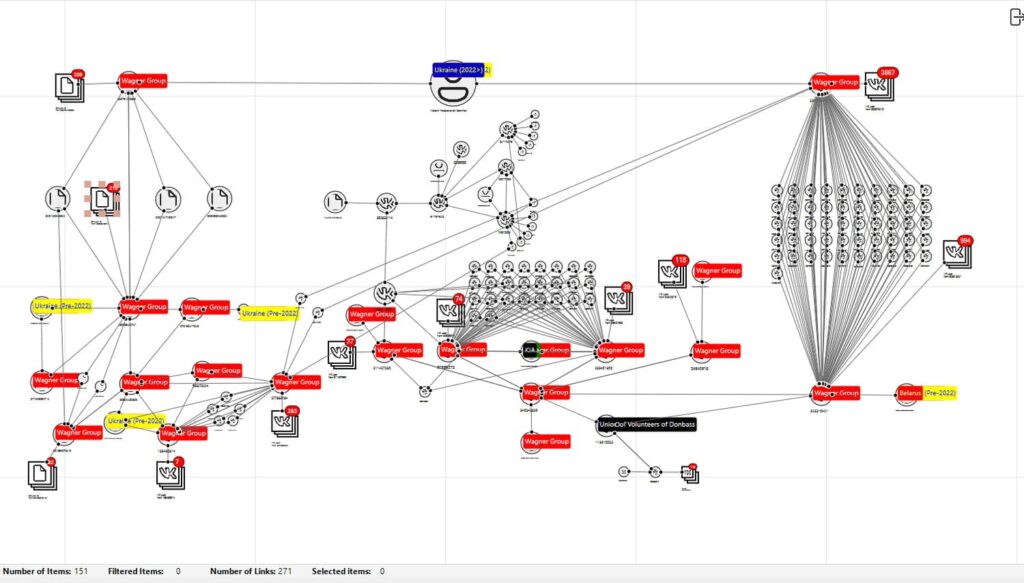
Using link analytics, I was able to produce a visual representation of social connections that exist between Wagner Group fighters. Essentially, this enabled me to take all user IDs obtained from the data acquisition process and identify mutual connections. Using this intelligence, I now had the ability to research additional profiles of interest and determine the nature of the relationship in question, i.e. is this person a Wagner Group fighter or not?!
So what does the data tell us about the Wagner Group?
A significantly large number of Wagner Fighters share direct connections with others. Most often, these fighters were deployed to the same operational theatres as each other; for example, Libya, Sudan, and Syria (to name but a very few). However, social connections also appear to be driven by the fact that many Wagner Group fighters previously served alongside each other in the Russian Armed Forces. Mutual connections between these Wagner Group fighters has yielded great results in terms of revealing the identities of additional fighters.
Visual content is generally more ‘hit-and-miss’ for a variety of reasons. On Telegram channels and group reporting on the war in Ukraine, images and videos of Wagner Group fighters generally show individuals concealing their faces when in camera view. This lends weight to the assessment that Wagner Group fighters undergo personal security (PERSEC) training. As to whether such activities are conducted during the recruit training process in Molkino, Krasnodar; or, on arrival to occupied eastern Ukraine remains a point of speculation.
However, there are exceptions when discussing Wagner Group fighters and the concealing of faces. The first exception is for senior commanders such as Anton Olegovich Elizarov [callsign “Lotus”] and Alexander Sergeevich Kuznetsov [callsign “Ratibor”]. That said, we also know that other senior commanders such as Dimitry Utkin likely go to extreme lengths to keep out of the public eye. The second and last exception to the rule is with regard to fighters conscripted from prisons. When discussing why this is the case; we should remember that prisoners were conscripted into the Wagner Group as an expendable force to the extent where PERSEC was not a concern – nor is it still.
What about foreign fighters?
This is very complex issue that simply cannot be summarised in a few words. However, it should be pointed out from the very start that the Wagner Group does not recruit people from EU / NATO member countries. However, there are exceptions, and foreigners are known to be fighting in the Wagner Group or previously fought.
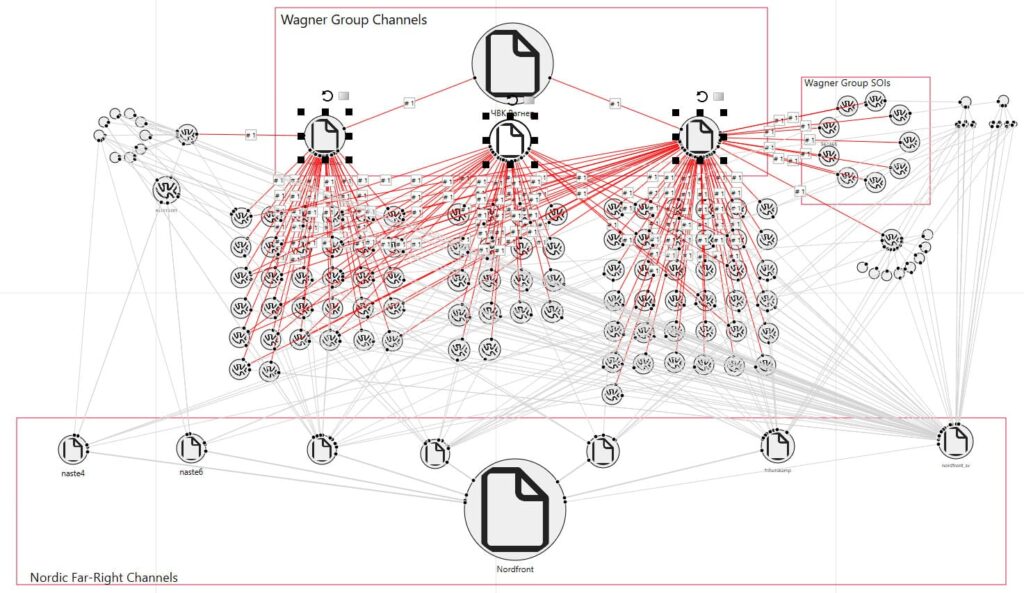
Firstly, the recruitment of citizens from EU / NATO member countries is allowed inside of known Wagner group proxies including Task Force Rusich and the Prizak [Ghost] Brigade. Indeed, in the case of the former, a dual-Norwegian-Russian citizen serves as the Deputy Commander! It is also worth pointing out that there are distinctive links between Wagner Group communities on social media and the European hard-right.
Lastly, foreigners that were imprisoned in Russia are known to have been press-ganged into joining the Wagner Group and serving on the frontline in Ukraine for a six-month period. However, it remains unclear whether imprisoned citizens of EU / NATO member countries were conscripted, though there doesn’t seem to be any reason why not considering that conscripts were used as an expendable force.
Next steps…
My work will undoubtedly continue as more and more Wagner Group fighters are being identified on a regular basis. The analysis of their social media profiles and associated visual content is enhancing our understanding of the Wagner Group and how they operate. This insight is essential in the ongoing war and can further determine the outcome of any future war crimes trials.


