
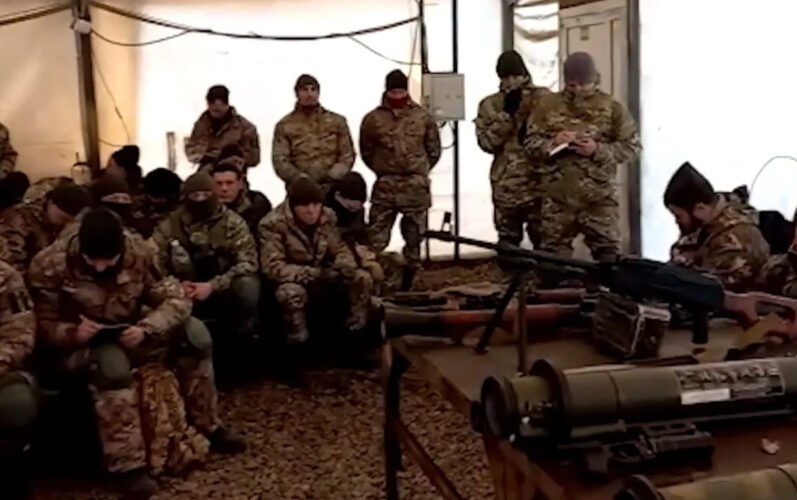
On 02 February 2023 – The Russian Federal News Agency – which very much functions as the official mouthpiece for the Wagner Group – posted on its Telegram channel a video showing militiamen from Kursk and Belgorod receiving training at the Wagner Group’s training facility located at Molkino, Krasnodar. An example of the Wagner Group building, equipping, and training proxies for a variety of purposes. Why, and what advantages do they bring?
Following the invasion of Crimea, the Wagner Group was likely tasked to develop the capabilities of a considerable number of militia groups such as the ultra-far-right ‘Rusich’, Karpaty, Prizak Brigade, and many more.
The Union of Donbas Volunteers (UDV)
The question here is when, where, why, and how. The binding link between the Wagner Group and their Donbas proxy groups is assessed to be based on the fact that all of such groups are founding members of the UDV. Officially, the UDV is a 14,000-member organization largely composed of “veterans” of Russia’s war against Ukraine that was established by former Russian Deputy Prime Minister Vladislav Surkov in 2015. The official formation of the UDV was documented in May 2016 following a high-profile gathering of key personalities from various militant groupings that (in most respects) broke away from the mainstream LPR and DPR People’s Militias. Those in attendance at the meeting were identified by InformNapalm.
However, from the list of names, attention should be directed to the attendance of:
- Alexei Milchakov, Commander of Task Force Rusich
- Yury Shevchenko – Commander of the Prizak [Ghost] Brigade
- Alexander Ilyutenko – named Wagner Group recruiter
- Roman Telenkevich – owner of ENOT Corps PMC
- Nikolai Diakonov – Deputy Commander of the Don Brigade
- Vasiliy Geranin – Russian military intelligence (GRU)
- Mikhail Shlyanin – named Wagner Group member and commander of the northern detachment of the so-called ‘Special Military Operation
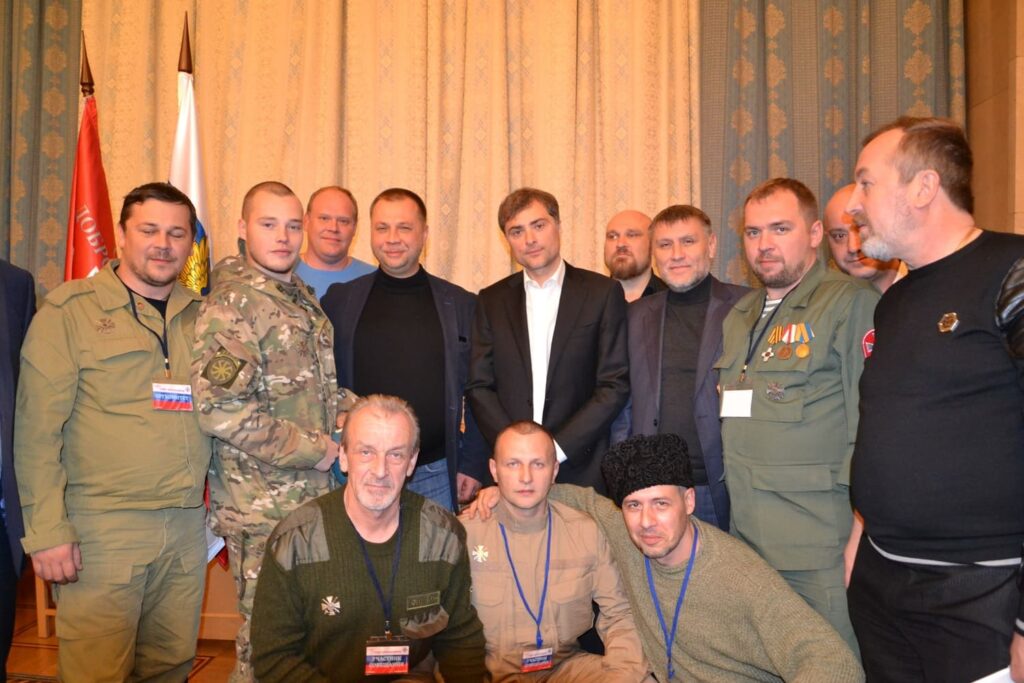
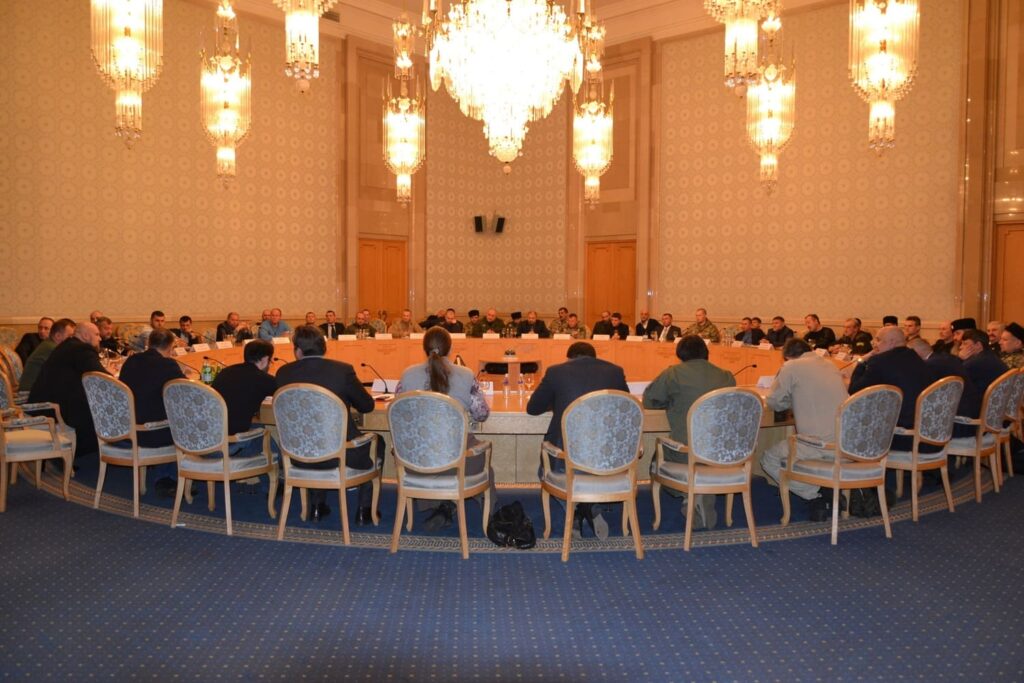
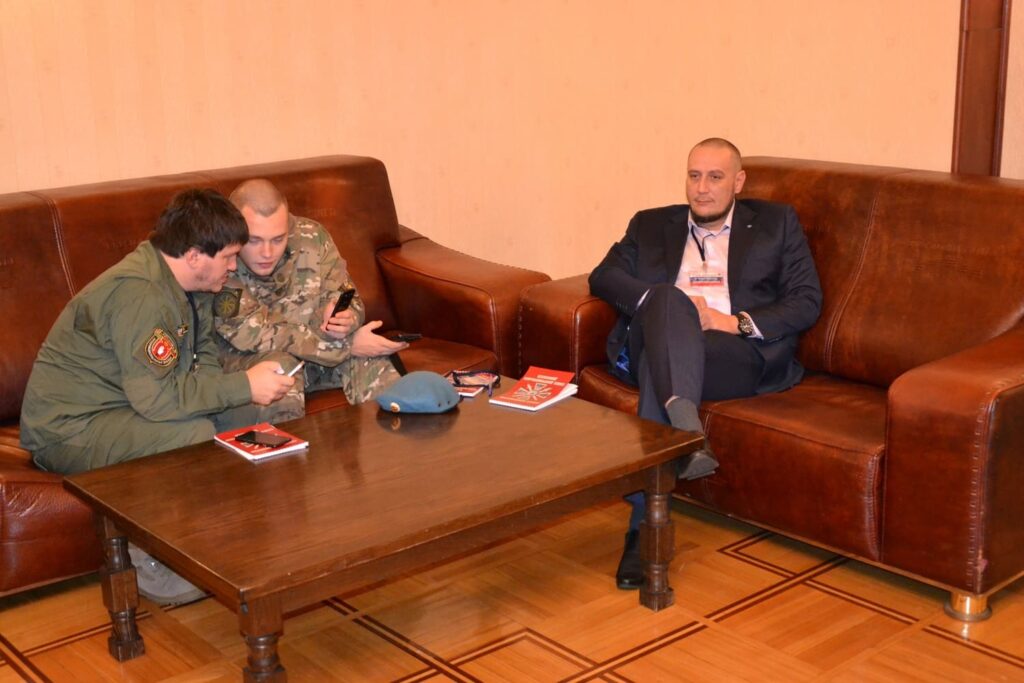
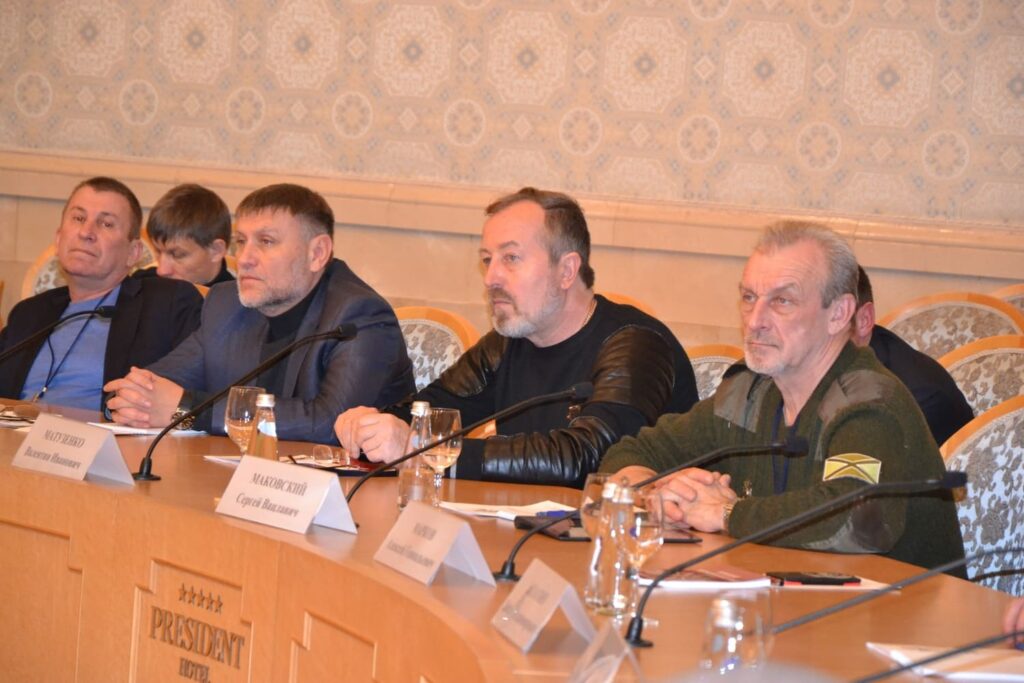
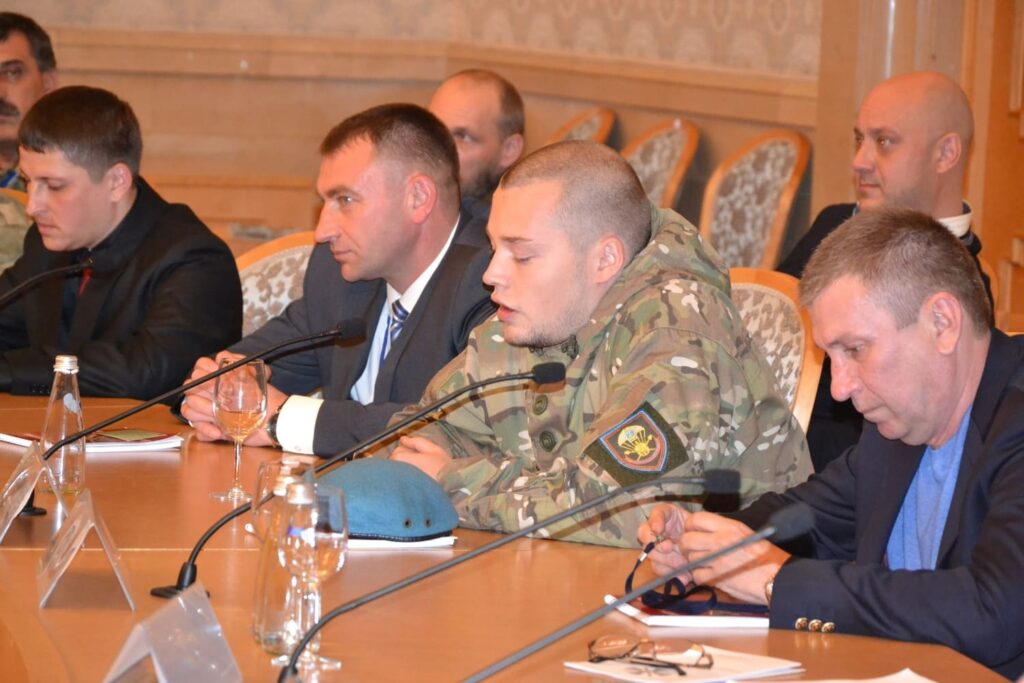
The meeting, chaired by Surkov, led to several commitments including the provision of support from the Kremlin to the representatives. This further prompted Nikolai Kozitsyn to issue an order in January 2017 calling for the formation of additional units of “volunteers” to be deployed to the Donbas. In addition, representatives present at the meeting spoke about the need to deploy Russian “volunteers” to fight elsewhere in the world. Considering that the Wagner Group is active across a number of countries, the aforementioned pledge to support Russian external activities is likely to be closely tied together. Also, it probably explains the documented involvement of Rusich and Karpaty fighters in Syria.
The rise and fall of ENOT Corps PMC
Initially, much of the external support being directed by Russia to the Donbas is assessed to have been primarily led by the ENOT Corps PMC. This is likely to be the case based on two primary factors. Firstly, the majority of Wagner Group’s focus was on security operations in Syria. Secondly, ENOT Corps PMC was probably selected by the GRU to following the annexation of Crimea to backfill Russian operations in the Donbas due to the Wagner Group becoming considerably over-stretched based on the former point.
One year after the high profile gathering of the UDV with Vladislav Surkov, ENOT Corps PMC released a statement on their webpage indicating that they were removing themselves from the UDV due to disagreements. By this point, Rusich members were photographed in Palmyra, an area of operations for the Wagner Group in Syria. Though unconfirmed, the possible widening of Wagner Group influence over the UDV – could have been a key deciding factor for the ENOT Corps PMC to remove themselves. In the same statement, ENOT Corps PMC indicated that its commander Roman Telenkevich would “participate in Russia’s internal political processes”. This statement likely triggered a series of retaliatory measures by the Kremlin which began in August 2017 when two ENOT Corps PMC leaders were arrested in Krasnodar. According to unconfirmed media reports, the two leaders were coerced by the FSB to extract statements claiming that Roman Telenkevich had extorted money.
Ukrainian media has consistently pointed out that ENOT Corps PMC likely failed in its goal to become an instrumental force on par with the Wagner Group for several reasons. Firstly, it attracted negative media attention by indicating that Roman Telenkevich – ENOT Corps PMC CEO – had spoken in favour of politically challenging the establishment. Secondly, and despite the fact that Evgeny Prigozhin probably has similar ambitions, he remains loyal to Vladimir Putin. In addition, unlike the Wagner Group being installed with a key Putin ally such as Evgeny Prigozhin, ENOT Corps PMC did not receive the same level of ‘top cover’ – ultimately exposing their vulnerability to falling-out-of-favour very fast.
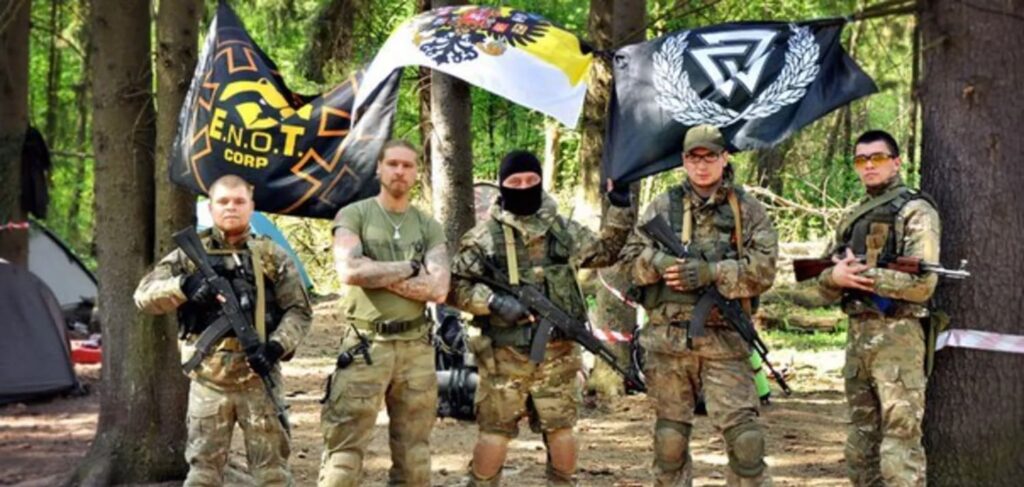
With the ENOT Corps PMC and Roman Telenkevich no longer influencing the UDV, the Wagner Group – with the backing of the Kremlin (via Prigozhin) likely had the means to fill this void and expand on their own influence campaign which likely led to the development of several proxy groups willing to fight on the Wagner Group’s behalf. For their parts, fighters from both Rusich and Karpaty are deployed to Syria in order to supplement existing security operations. Several named Prizak [Ghost] Brigade fighters are also named by Myrotvorets to have been deployed as Wagner Group contractors. The deployments of fighters is highly likely in-line with the perceived transactional agreement made between Surkov and UDV representatives whereby the latter would receive support from the former in exchange for their willingness to support Russian operations in other operational theatres.
Utilisation of proxies
Tactically and operationally, it makes sense for the Wagner Group to develop and use proxies for several purposes. Firstly, it creates capacity for Wagner Group contractors by operating in combat support roles such as guarding key sites and maintaining logistical corridors. Secondly, they are somewhat expendable. For example, prior to Prigozhin’s documented visits to Russian prisons, several social media posts drew attention to Wagner Group and militia forces fighting together in Mariupol. However, unlike the prison conscripts, Prigozhin unlikely sought to use his proxies as “cannon fodder”. Strategically, the development of proxies by Wagner Group enables Prigozhin to maintain considerable influence both in the context of the so-called ‘Special Military Operation’ and occupied Ukraine as a whole. Why? It is in Prigozhin’s financial and aspirational political interests to keep the war going.
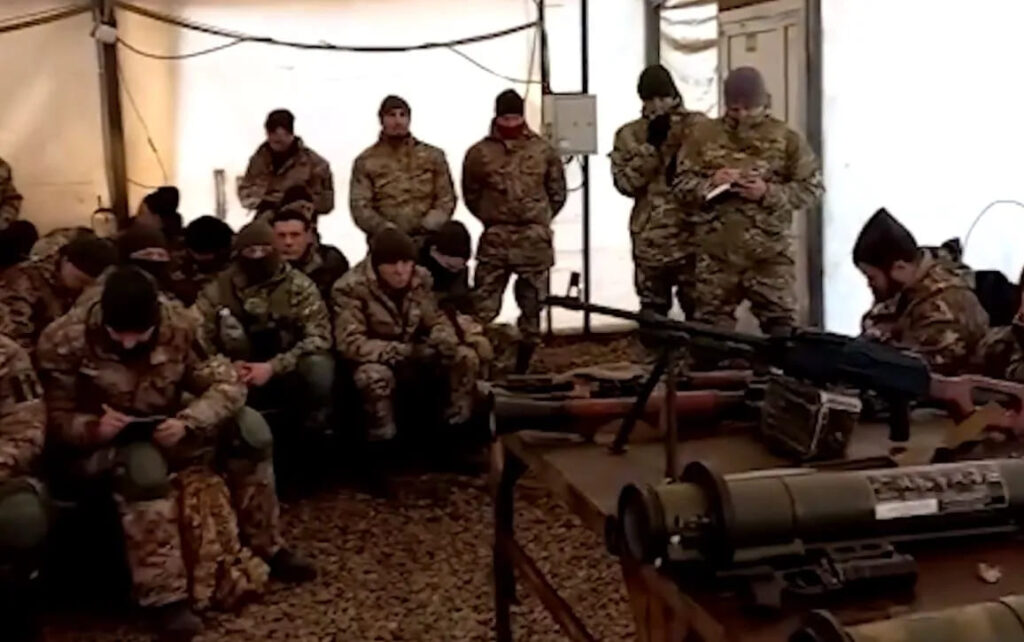
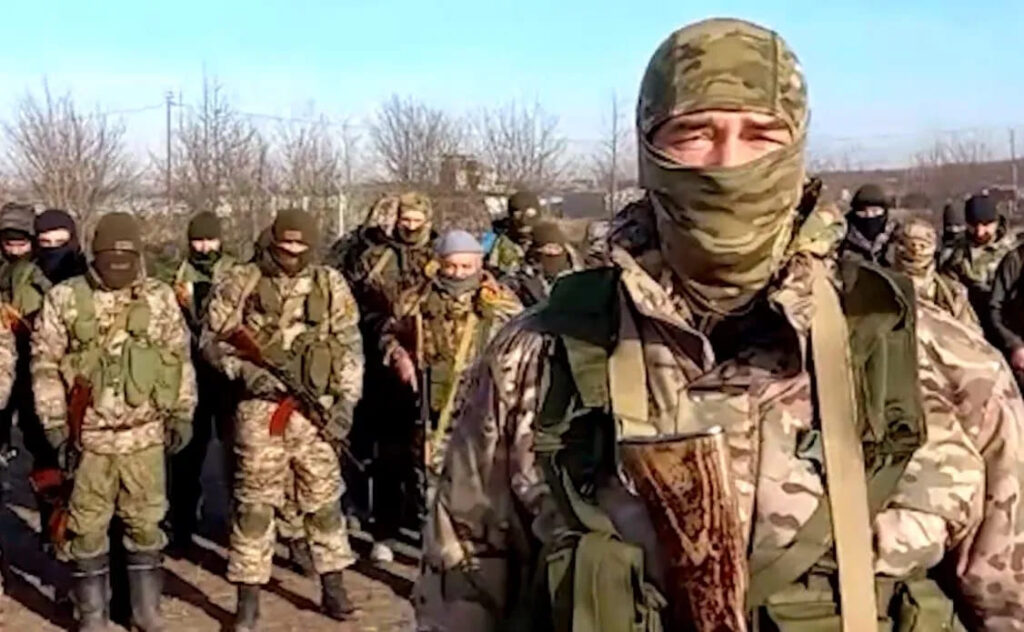
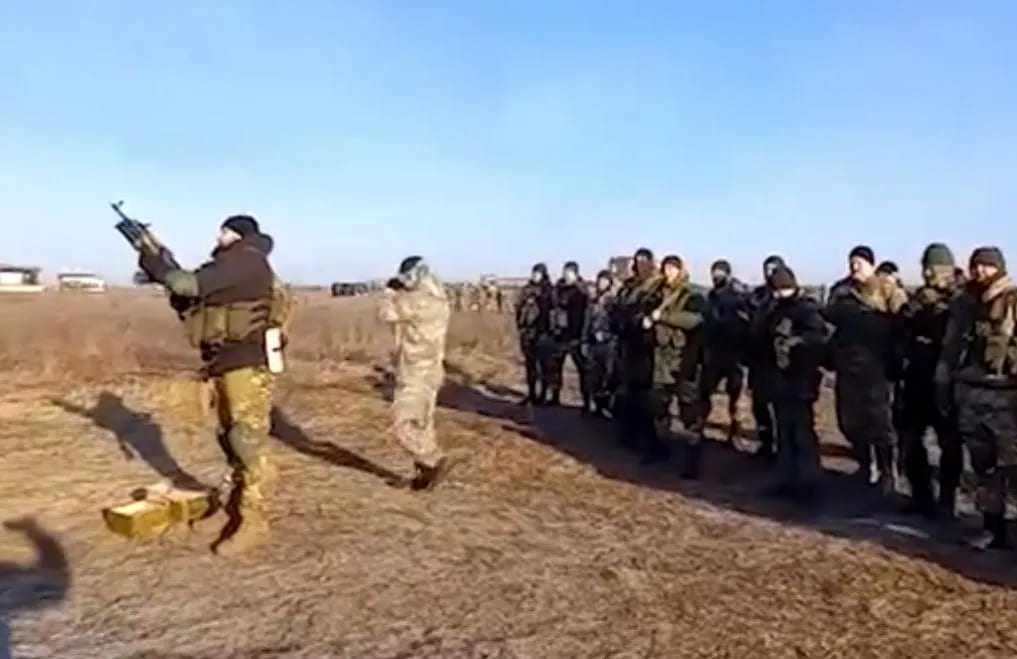
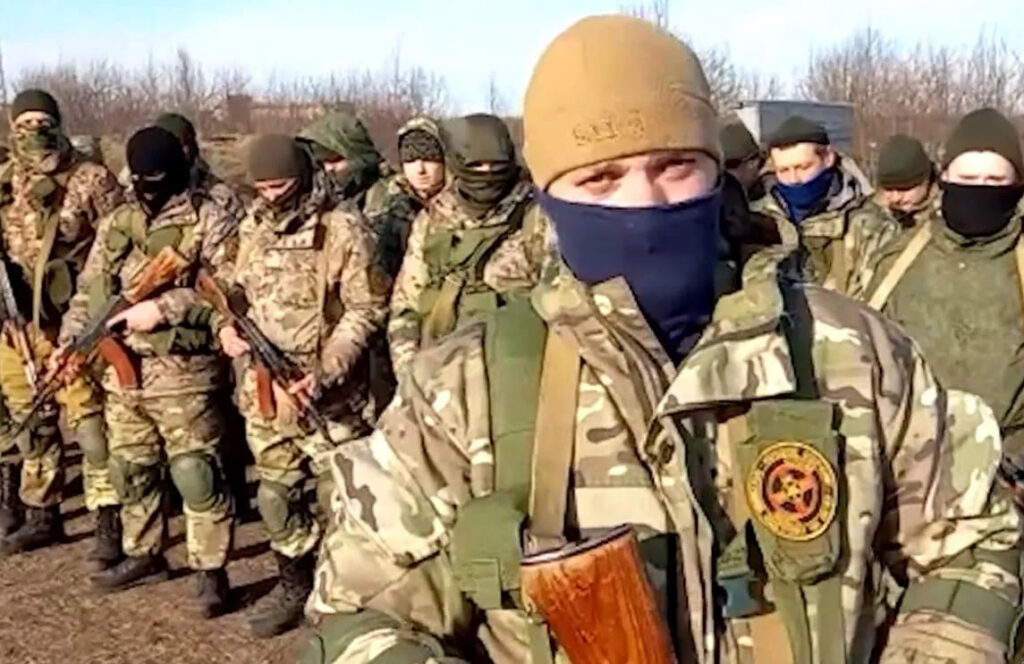
Should these proxies be regarded as subordinates to the Wagner Group? It depends. For some members of the more well-established groups, it is documented online that they served under a Wagner Group contract. In this regard, the line of separation between the Wagner Group and proxies is very clear. However, in relation to the militias recorded at Molkino on 02 February 2023, it was explicitly pointed out that the ‘militiamen’ had not signed Wagner Group contracts. In this regard, the line is very blurred indeed.


